
The Price Of Wanting More
HARD-EARNED LESSONS

Human ambition has built extraordinary things. Civilizations, technology, art, science, medicine,
and progress itself have all been shaped partly by the human desire for more. More knowledge. More comfort. More success.
More achievement. More security.
Ambition itself is not the problem.
In many ways, it gives direction, discipline, and purpose to life.
But somewhere along the way, many people quietly stop asking an important question:
How much is enough?
Without that question, ambition can slowly transform from a healthy force into a permanent state of dissatisfaction.
Modern life constantly encourages comparison.
People are repeatedly exposed to:
other people’s achievements,
lifestyles,
possessions,
relationships,
travel,
appearance,
influence,
and success.
As a result, many individuals begin measuring their own lives against endless external standards.
Contentment becomes difficult when comparison never ends.
A person achieves one goal, only to immediately feel pressure toward the next.
One milestone becomes another starting point.
Rest itself begins to feel irresponsible.
Over time, life can quietly become an endless pursuit without arrival.
This pursuit carries costs that are not always visible immediately.
Health may weaken.
Relationships may become secondary.
Peace may disappear gradually.
Moments once meant for living become consumed by striving.
Ironically, many people spend years sacrificing present peace in pursuit of a future life they may never fully experience.
There is also another subtle danger in excessive wanting:
human desires expand easily.
What once felt extraordinary slowly becomes normal.
A person who once dreamed of financial stability may later feel dissatisfied despite material comfort.
Recognition creates desire for greater recognition.
Success creates pressure to maintain success.
Achievement increases fear of decline.
Without inner balance, “more” can quietly become endless.
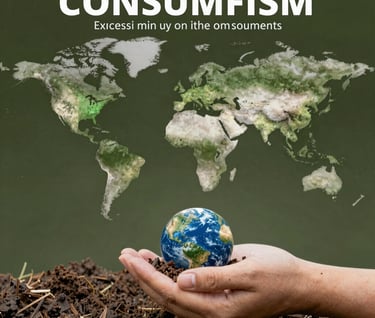
Modern systems often reinforce this condition because dissatisfaction fuels consumption.
People who constantly feel incomplete are easier to motivate economically:
buy more,
upgrade more,
achieve more,
display more,
consume more.
Yet history repeatedly shows that external accumulation alone does not guarantee inner peace.
Some individuals possess very little and remain emotionally stable.
Others possess enormous privilege and remain restless internally.
This does not mean ambition should be abandoned.
Human growth matters.
Meaningful work matters.
Financial stability matters.
But perhaps ambition functions best when guided by awareness rather than endless appetite.
A person who knows what truly matters to them stands a better chance of avoiding unnecessary exhaustion.
At some point in life, many people begin discovering that peace itself has value.
Not passive withdrawal from life,
but freedom from constant internal chasing.
The ability to enjoy ordinary moments without feeling perpetually behind.
To work without losing oneself entirely within the work.
To pursue goals without sacrificing every other dimension of being human.
Perhaps one of the hardest lessons life teaches is this:
if a person never learns where to stop seeking more, the search itself may quietly consume the very life they were trying to improve.