The Quiet Fear Of Slowing Down
LATEST POSTS
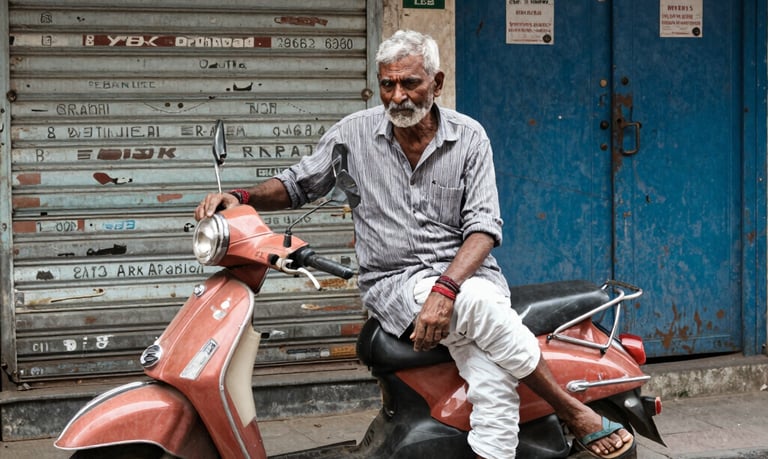
From a young age, many individuals are conditioned to believe that continuous activity is a sign of relevance and success. Rest begins to feel unproductive. Stillness begins to feel dangerous.
Modern life rewards movement.
People are encouraged to:
move faster,
achieve more,
stay productive,
remain visible,
and constantly pursue the “next step.”
From a young age, many individuals are conditioned to believe that continuous activity is a sign of relevance and success. Rest begins to feel unproductive. Stillness begins to feel dangerous.
Over time, many people become uncomfortable with slowing down.
Not because they necessarily enjoy the speed, but because movement helps them avoid certain questions:
Am I truly happy?
Is this the life I actually wanted?
Why do I feel restless even after achieving things?
What remains when the distractions stop?
Constant busyness can sometimes become a form of escape.
As long as life remains crowded with:
deadlines,
notifications,
meetings,
entertainment,
obligations,
and noise,
there is very little space left for self-confrontation.
Slowing down changes that.
Silence begins to expose thoughts that activity had temporarily buried.
This may explain why many people instinctively reach for stimulation the moment life becomes quiet:
phones,
music,
scrolling,
television,
endless conversation,
or unnecessary activity.
Stillness can feel unfamiliar because modern systems rarely encourage reflection without purpose.
Yet some of the most important realizations in life often emerge only after slowing down.
A person walking quietly without urgency may suddenly notice exhaustion that had been ignored for years.
Someone sitting alone without distraction may realize how deeply they have been living according to expectation rather than inner conviction.
These moments are not always comfortable.
But they are often honest.
There is also another reality modern life quietly hides:
human beings are not machines designed for endless acceleration.
The mind needs recovery.
The body needs rest.
The emotions need processing.
The spirit — whatever one chooses to call it — needs silence occasionally.
Without pauses, people may continue functioning externally while gradually feeling disconnected internally.
Ironically, slowing down does not always reduce clarity or effectiveness. Sometimes it restores them.
A calm mind often sees more accurately than an exhausted one.
Perhaps this is why some of life’s deepest moments arrive during periods that appear outwardly unproductive:
sitting quietly at dawn,
watching rain,
taking a slow walk,
reading without urgency,
or simply remaining unavailable for a while.
These moments rarely generate applause.
But they often restore perspective.
And maybe that is what many modern people are truly deprived of:
not opportunity,
not information,
not entertainment,
but perspective.