
Why Some People Become Quiet With Age
LATEST POSTS
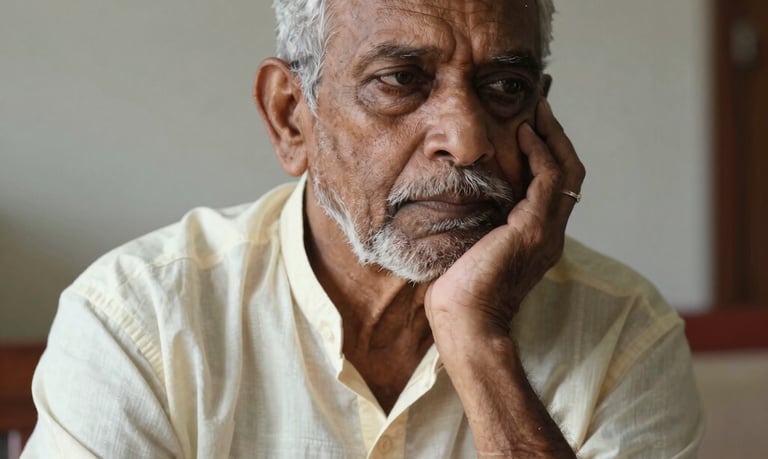
When people are young, they often feel a strong need to explain themselves to the world.
They defend opinions passionately.
They seek recognition.
They try to prove capability, intelligence, success, or importance. Many conversations become attempts to establish identity.This is a natural phase of life.
A young mind is still discovering itself, and with that discovery comes the desire to be seen and acknowledged.
But as some people grow older, a subtle change sometimes begins to occur.
They speak less.
Not necessarily because they have less to say, but because experience gradually alters their relationship with words, conflict, certainty, and approval.
Life teaches certain lessons repeatedly:
not every argument changes minds,
not every misunderstanding needs correction,
not every opinion deserves emotional investment,
and not every silence is weakness.
Over time, many individuals begin conserving emotional energy more carefully.
Some realize that constant explanation can become exhausting. Others discover that being understood by everyone is neither realistic nor necessary.
A person who has lived through enough victories, failures, relationships, disappointments, ambitions, and reversals often develops a quieter relationship with ego itself.
There is less urgency to constantly announce identity.
Another reason some people grow quieter is that life gradually reveals complexity.
When younger, many issues appear simple:
right or wrong,
success or failure,
good or bad,
intelligent or foolish.
But deeper experience complicates these neat divisions.
People begin encountering situations where:
good individuals make poor decisions,
sincere efforts fail,
intelligent people remain confused,
and certainty itself becomes less reliable.
This tends to soften rigid judgment.
The more a person understands human complexity, the less aggressively they often speak about absolute conclusions.
There is also another quiet truth:
some forms of pain become difficult to fully explain.
Loss,
regret,
aging,
loneliness,
disappointment,
betrayal,
and the passage of time
change people internally in ways language cannot always easily communicate.
As a result, silence sometimes becomes more honest than excessive explanation.
Modern culture, however, often misunderstands quiet people.
Loudness is frequently associated with confidence and importance, while silence is mistaken for weakness, lack of intelligence, or disengagement.
Yet some of the quietest individuals are simply those who have observed enough to no longer feel the need to react to everything.
They may still think deeply.
Still care deeply.
Still observe carefully.
But they become more selective about where they place words and energy.
Interestingly, truly comfortable silence between human beings is rare.
Many people speak continuously because silence feels uncomfortable. But those who become quieter with age sometimes begin appreciating silence differently.
Not as emptiness,
but as space.
Space to observe.
Space to think.
Space to understand.
Space to simply exist without performance.
Perhaps this is why certain older individuals develop a calm presence even without speaking very much.
Life itself has already spoken extensively through them.